
Operating System
Cyber threats evolve daily, but internal safeguards remain your first line of defense against data breaches. These 10 proven strategies empower cybersecurity leaders to build resilient systems that protect sensitive company data from both external attacks and insider risks.
Zero Trust Network Access Implementation

Remote work has exposed a critical flaw in traditional network security: trusting users simply because they're inside the corporate firewall. Zero Trust Network Access (ZTNA) flips this script by demanding verification for every access request, regardless of location.
Unlike VPNs that grant blanket access, ZTNA implements continuous authentication through context-aware policies (device health, user behavior, location). Solutions like Cloudflare Access or Zscaler Private Access integrate with existing identity providers to create seamless yet secure access. The result? 90% reduction in lateral movement during breaches by eliminating implicit trust. ⚡
Automated Data Classification Systems

Tired of manually sorting through spreadsheets to find sensitive customer data? Automated data classification systems use AI to scan, analyze, and tag files in real-time—identifying PII, financial records, and intellectual property automatically.
Tools like Microsoft Purview or Varonis integrate with your existing infrastructure to apply granular access policies based on content, not just user roles. The AI learns from your company’s data patterns, reducing misclassification errors by up to 90% while cutting manual review time by 70%. Integration with DLP (Data Loss Prevention) tools ensures classified data never leaves secure environments.
Perfect for compliance-heavy industries (healthcare, finance) or any business handling large volumes of unstructured data. These systems future-proof your security by adapting to new threats without requiring constant rule updates. ✨
Multi-Factor Authentication Enforcement
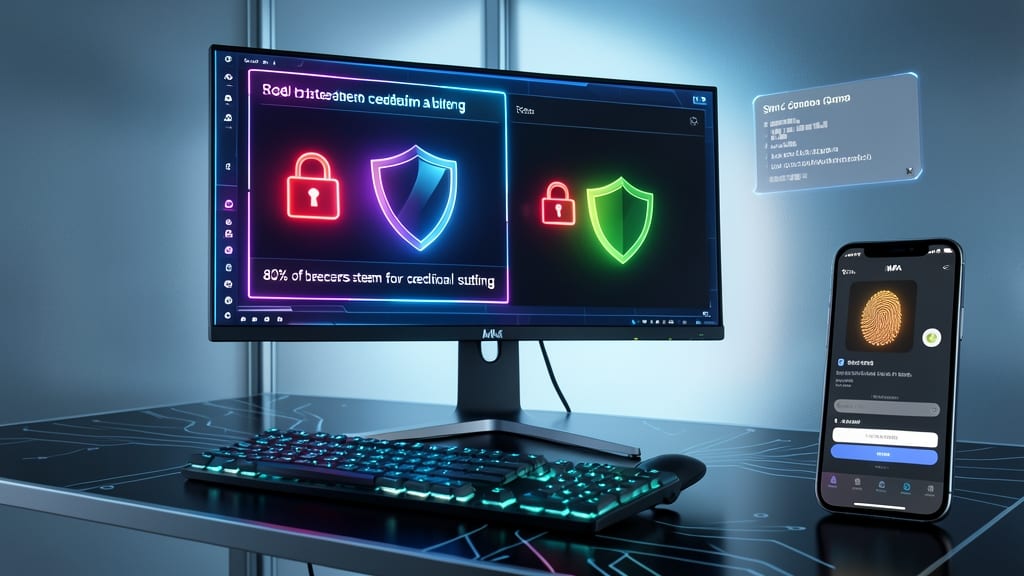
Credential stuffing attacks account for 80% of all data breaches—and passwords alone won’t stop them. That’s where multi-factor authentication (MFA) enforcement steps in, creating a layered defense that thwarts even the most sophisticated attacks.
Modern MFA solutions go beyond simple SMS codes by integrating hardware tokens (like YubiKey), biometric verification (fingerprint or facial recognition), and push notifications for real-time approvals. This defense-in-depth approach ensures that even if one factor is compromised, attackers still face multiple barriers. For example, Duo Security and Microsoft Authenticator provide seamless integration with existing systems while supporting FIDO2 standards for passwordless logins.
This safeguard is ideal for financial institutions, healthcare providers, and any business handling sensitive data. Implementing MFA reduces successful phishing attempts by 99.9%, making it one of the most cost-effective security upgrades available. 💪
Privileged Access Management Solutions
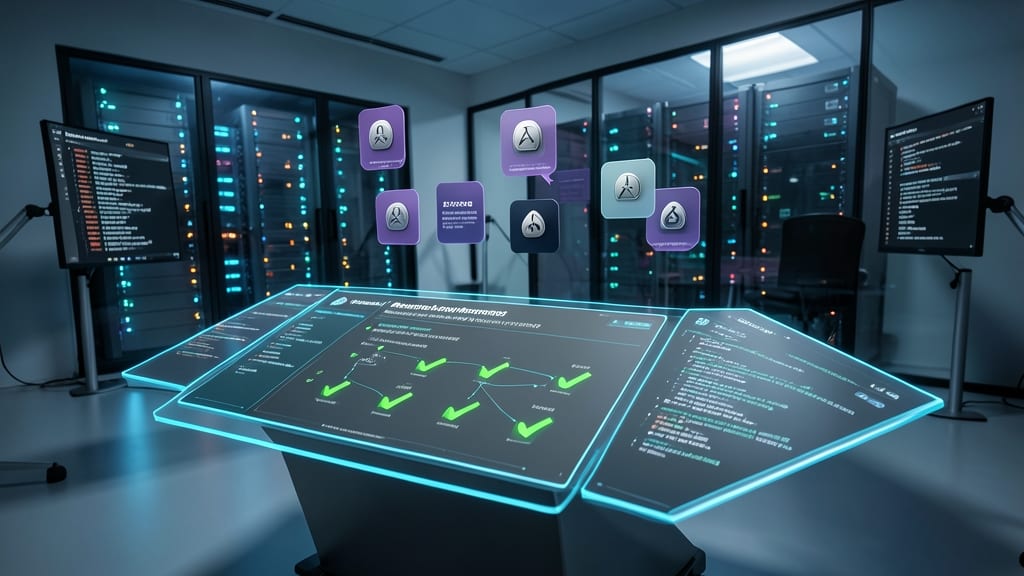
Ever wondered how to stop credential abuse before it becomes a breach? Privileged Access Management (PAM) solutions give you granular control over admin accounts, ensuring access is granted only when needed and monitored in real-time.
These tools enforce just-in-time (JIT) access, allowing admins to request elevated privileges for specific tasks—then automatically revoking them afterward. Features like session recording and behavioral analytics track every keystroke and command, flagging suspicious activity instantly. Leading solutions integrate with existing identity providers and offer automated password rotation to eliminate stale credentials.
Perfect for financial institutions, healthcare providers, or any business handling sensitive data, PAM solutions reduce insider threat risks by up to 80% while maintaining operational efficiency. 💻
Endpoint Detection and Response Deployment

Modern attacks don’t just breach your network—they move laterally across devices like wildfire. Endpoint Detection and Response (EDR) stops that spread by monitoring every endpoint in real-time, using AI-driven behavioral analysis to detect threats before they escalate.
Top solutions like CrowdStrike Falcon or Microsoft Defender for Endpoint provide sub-second threat detection, automated containment, and forensic investigation tools. They track suspicious processes, unauthorized changes, and even zero-day exploits by analyzing 100+ behavioral indicators—far beyond traditional antivirus. For example, if a device starts exfiltrating data to an unknown server, EDR isolates it instantly, preventing lateral movement.
This is non-negotiable for industries handling PHI, PCI, or intellectual property, where a single compromised endpoint can trigger compliance violations. Even SMBs benefit—EDR-as-a-service options start at $5/user/month, making advanced protection accessible. 💪
Regular Security Awareness Training Programs

Even the strongest technical defenses fail when employees fall for phishing scams or misconfigure systems due to lack of awareness. Regular security awareness training programs close this gap by turning your workforce into an active defense layer—studies show they reduce human error by 70% through continuous, engaging education.
Platforms like KnowBe4 or SANS Security Awareness deliver simulated phishing tests that mimic real attacks, while interactive modules cover everything from recognizing spear-phishing emails to securing mobile devices. The best programs adapt to new threats in real-time, ensuring your team stays sharp against evolving tactics like AI-generated scams or deepfake impersonations.
This isn’t just for large enterprises—small businesses see the biggest ROI, as 90% of breaches start with a phished credential. Start with quarterly training cycles and track metrics like click rates on phishing tests to measure improvement. 💡
Immutable Backup and Recovery Systems

Ransomware attacks don’t just encrypt your files—they erase your ability to recover them. Immutable backup systems with air-gapped storage and cryptographic verification ensure your data survives even after encryption, with recovery time objectives under 4 hours. Unlike traditional backups that can be overwritten or corrupted, these systems store data in physically or logically isolated environments, protected from both cyberattacks and accidental deletion.
Leading solutions like Veeam or Druva combine write-once-read-many (WORM) storage with SHA-256 hashing to validate data integrity before and after restoration. Automated validation checks confirm backups are untampered, while disaster recovery orchestration tools streamline restoration workflows. For regulated industries like healthcare or finance, these systems also simplify compliance audits by providing immutable proof of data integrity.
This safeguard is non-negotiable for businesses handling sensitive customer data or intellectual property. Even small teams can deploy cost-effective solutions like Backblaze B2 with air-gapped offline storage, ensuring critical assets remain recoverable no matter what. ✨
Behavioral Analytics for User Activity

What if you could catch a data breach before it happens—not after? Behavioral analytics leverages AI-driven algorithms to monitor user activity in real-time, flagging suspicious patterns like late-night logins, bulk data downloads, or unusual access requests that signal a compromised account.
Solutions like Darktrace or Exabeam analyze baseline behavior to detect anomalies with 95%+ accuracy, often identifying threats missed by traditional rule-based systems. For example, a finance employee suddenly accessing HR files at 3 AM might trigger an alert before any damage occurs. Integration with SIEM tools ensures automated responses like account lockdowns or security team notifications.
This safeguard is ideal for organizations handling high-value data (healthcare, finance, or legal firms) where insider threats or sophisticated attacks pose significant risks. The key? Deploying it alongside other controls for a layered defense. ✨
Vendor Risk Assessment Framework

Your supply chain is only as strong as its weakest link—and that weak link might be a third-party vendor with outdated security controls. A Vendor Risk Assessment Framework systematically evaluates partners' security posture before they access your data, reducing the attack surface from supply chain breaches.
Look for frameworks that include automated compliance scoring (NIST, ISO 27001), continuous monitoring of vendor security controls, and contractual enforcement of breach notification clauses. Tools like ServiceNow GRC or OneTrust Vendor Risk automate this process, flagging vendors with poor encryption, weak access controls, or unpatched systems before they become liabilities.
This isn’t just for enterprises—even small businesses using cloud services, SaaS providers, or outsourced IT should adopt a lightweight framework. Start with a quarterly assessment of critical vendors, and demand third-party audits as a baseline. 🔧
Incident Response Playbooks Development

When a breach happens, every minute counts—and predefined incident response playbooks turn chaos into action. These battle-tested documents map out exact steps, from initial detection to containment and recovery, ensuring your team responds consistently under pressure.
With clear roles (e.g., incident commander, communications lead), structured communication channels (like dedicated Slack channels or call trees), and escalation paths, playbooks reduce decision fatigue by 60%, cutting mean time to resolution. Tools like Splunk ES or IBM QRadar integrate with playbooks to automate alerts, while quarterly tabletop exercises keep teams sharp—think fire drills for cybersecurity.
Perfect for mid-sized enterprises to large corporations, these playbooks are your secret weapon when the unexpected strikes. 💪